Car Polish and Paint Correction: Restoring the True Beauty of Your Vehicle
When it comes to maintaining a car’s appearance, car polish and paint correction are two critical processes that help restore and enhance a vehicle’s original shine. Both play essential roles in improving the aesthetics and value of a vehicle, whether it’s a daily driver or a cherished collectible.
- What Is Car Polish?
Car polish is a product designed to smooth out minor imperfections on a car’s paint surface, creating a more reflective and uniform finish. It differs from waxing because, rather than adding a protective layer, it helps correct blemishes by removing a tiny layer of the car’s paint or clear coat, depending on the level of abrasion used.
Types of Car Polish
Abrasive Polish: Contains compounds that can correct deeper scratches, swirl marks, and oxidation.
Non-Abrasive Polish: Used for mild imperfections, adding shine without cutting into the paint layer.
Polish helps achieve a glossy, showroom finish but is often just one part of a larger paint correction process. - Understanding Paint Correction
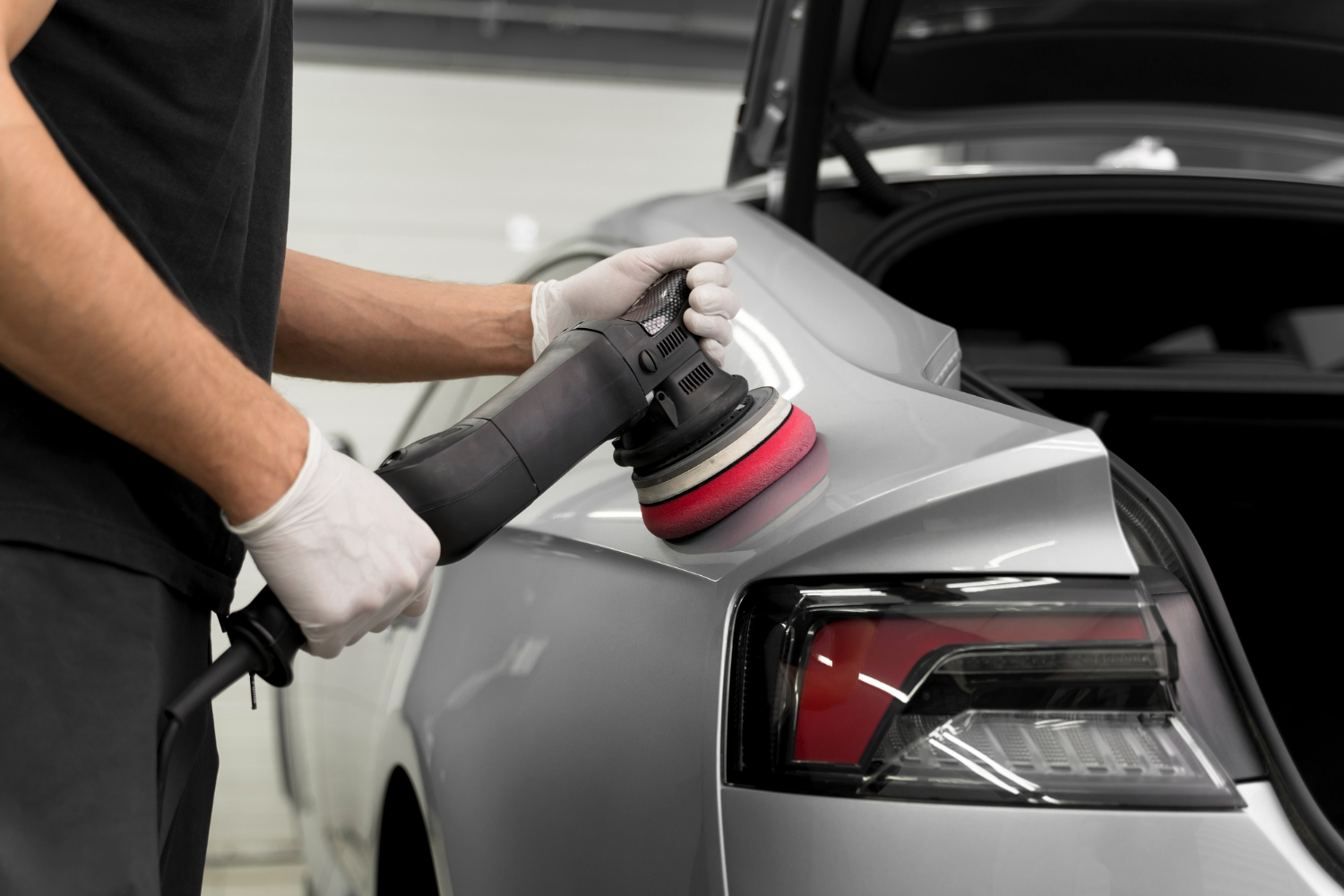
Paint correction is a multi-step process designed to remove imperfections in a vehicle’s paint, such as swirl marks, scratches, oxidation, and even water spots. Using specialized equipment, compounds, and polishes, detailers can address various imperfections to bring back a vehicle’s original shine.
Levels of Paint Correction
Single-Stage Correction: Focuses on light surface blemishes and is ideal for newer cars or vehicles with minimal damage.
Two-Stage Correction: Combines more intensive polishing with finishing polish to tackle moderate imperfections.
Multi-Stage Correction: Used for heavy imperfections, requiring multiple rounds of cutting and polishing for a flawless finish. - How Car Polish and Paint Correction Work Together
In a complete paint correction process, polishes are often applied after using a more abrasive compound. The initial compound removes deeper imperfections, and polishing refines the surface, ensuring a high-gloss finish. This layered approach allows detailers to achieve depth and clarity in the paintwork, maximizing a car’s visual impact. - Why Car Polish and Paint Correction Matter
These processes provide more than just cosmetic benefits. Here’s why they’re worth the effort:
Improved Aesthetics: Restoring the paint brings back the vibrancy and depth of a car’s color.
Increased Resale Value: A polished, scratch-free exterior can significantly boost resale value.
Protection: By removing contaminants and minor scratches, polishing creates a smoother surface for protective wax or ceramic coatings, which adds durability. - Choosing the Right Tools and Techniques
If you’re considering DIY polishing or paint correction, the right tools and products are essential. A dual-action polisher is generally recommended for beginners, as it minimizes the risk of creating additional swirl marks.
For Minor Corrections: Opt for a finishing polish and soft foam pads.
For Moderate to Severe Corrections: Use cutting compounds with microfiber or wool pads, followed by polish for a refined finish. - How to Maintain Your Polished and Corrected Paint
After investing time and effort into polishing and correcting the paint, maintaining the finish is key. Use a gentle, pH-balanced car wash solution, avoid harsh brushes, and consider applying a wax or ceramic coating for added protection.
Post a Comment
You must be logged in to post a comment.